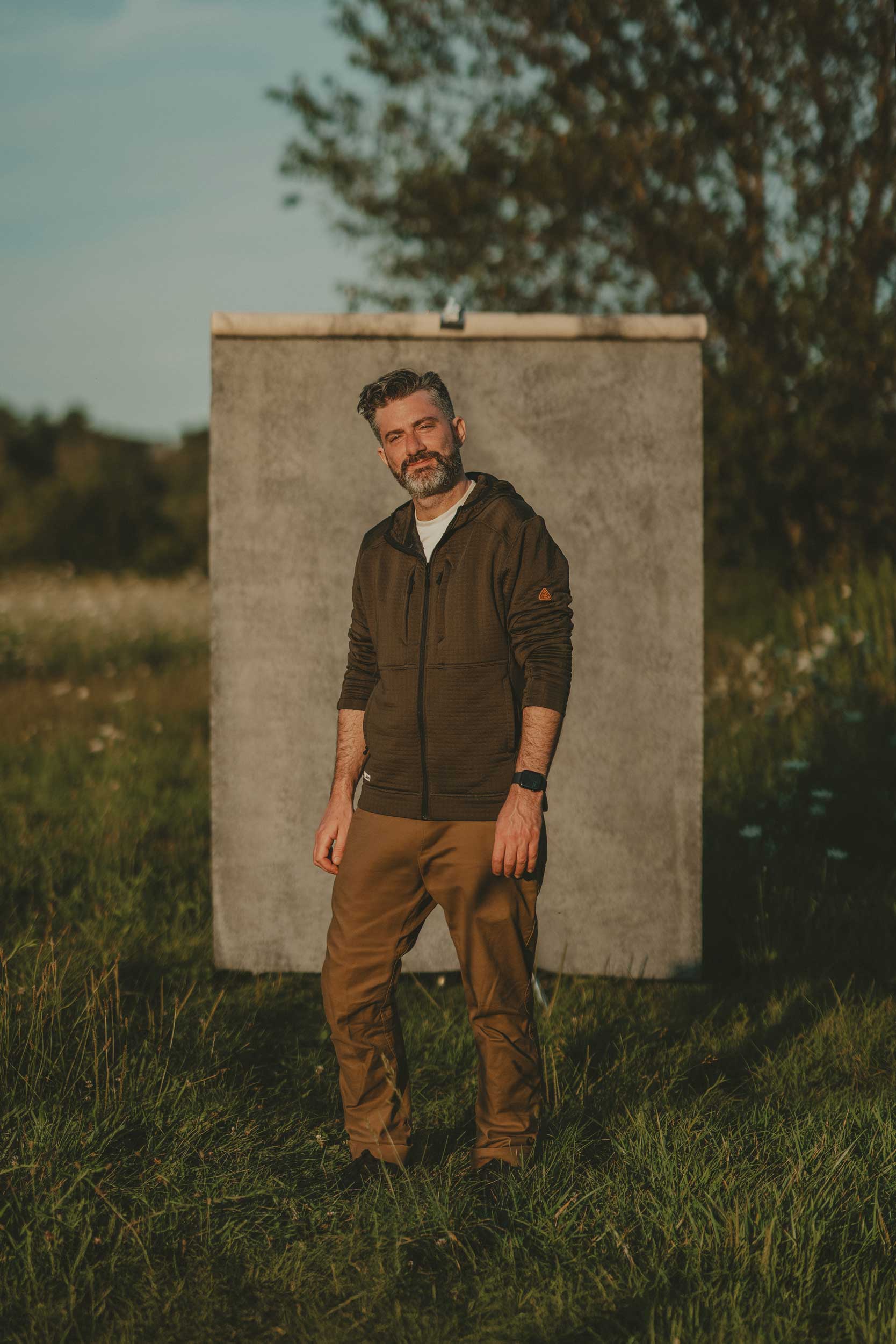
STEVE

CO-FOUNDER
CREATIVE DIRECTOR

STEVE

CO-FOUNDER
CREATIVE DIRECTOR

STEVE

CO-FOUNDER
CREATIVE DIRECTOR

Background & Career

Steve brings more than 15 years of experience across creative direction, brand strategy, and content production. His career has been shaped by work inside small to mid-sized agencies, where adaptability, collaboration, and hands-on execution are essential.

He has led creative and brand initiatives across a wide range of environments, balancing strategic thinking with day-to-day problem solving. His experience spans brand development, campaign creative, photography, video, and animation, with a consistent focus on clarity, cohesion, and craft.

Because much of his career required wearing many hats, Steve brings a grounded perspective to creative leadership. One rooted in understanding how ideas move from concept to execution.

What Steve Does

Steve is Co-Founder and Creative Director at Metacomet Studio.

He leads creative direction across brand, video, photography, and visual storytelling projects, guiding work from early strategy through final execution. He is closely involved in shaping narrative approach, visual language, and production decisions to ensure each project reflects intention and clarity.

Steve also remains hands-on in production, directing shoots, capturing photography and video, and working directly with partners in the field. His role bridges strategy and execution, helping organizations translate complex ideas into clear, human stories that hold up over time.

Steve’s Story

For a long time, I didn’t think too hard about where I was headed. I just knew I liked making things.

In high school, I took a graphic design class without much expectation. I liked making posters. I liked experimenting on the computer. That was enough. Around the same time, American Idol started airing, and my family watched it together every week. Music had always been part of my life. My mom studied opera at Indiana University, so I grew up paying attention to voices, emotion, and performance long before I understood how much that would influence the way I see the world.

Those two worlds came together when my design teacher encouraged us to enter the Coca-Cola Art of Harmony competition. The challenge was simple. Create artwork that expressed what harmony meant to you. I pulled from music, performance, and design and ended up placing second in the Midwest. There was an awards ceremony in Chicago, photos, applause, and that feeling that maybe this meant something. Then it was over. No big follow-up. Just a quiet realization that creativity might not be accidental.

From there, I kept following the work. I interned at agencies. I learned by doing. I gravitated toward environments where you were expected to figure things out, not wait for instructions. Working at smaller agencies meant wearing a lot of hats. You designed, thought strategically, talked to clients, and solved problems as they showed up. Sometimes all in the same day. It was messy, but it taught me how ideas actually move from concept to execution.

Eventually, I picked up a camera.

At first, it was practical. Another skill that made me more useful. But that changed quickly. Photography and video forced me to slow down and really pay attention. When you are behind a camera, you cannot fake understanding. You have to listen. You have to observe. You have to notice what is actually there instead of what you assume should be there.

That shift changed how I think about creativity. It stopped being about clever ideas and started being about attention. About people. About translating real moments into something honest and meaningful.

That mindset has stayed with me ever since. Across different teams, industries, and challenges, the throughline has remained the same. Curiosity over certainty. Listening before speaking. And a belief that the strongest creative work starts by paying attention.

Background & Career

Steve brings more than 15 years of experience across creative direction, brand strategy, and content production. His career has been shaped by work inside small to mid-sized agencies, where adaptability, collaboration, and hands-on execution are essential.

He has led creative and brand initiatives across a wide range of environments, balancing strategic thinking with day-to-day problem solving. His experience spans brand development, campaign creative, photography, video, and animation, with a consistent focus on clarity, cohesion, and craft.

Because much of his career required wearing many hats, Steve brings a grounded perspective to creative leadership. One rooted in understanding how ideas move from concept to execution.

What Steve Does

Steve is Co-Founder and Creative Director at Metacomet Studio.

He leads creative direction across brand, video, photography, and visual storytelling projects, guiding work from early strategy through final execution. He is closely involved in shaping narrative approach, visual language, and production decisions to ensure each project reflects intention and clarity.

Steve also remains hands-on in production, directing shoots, capturing photography and video, and working directly with partners in the field. His role bridges strategy and execution, helping organizations translate complex ideas into clear, human stories that hold up over time.

Steve’s Story

For a long time, I didn’t think too hard about where I was headed. I just knew I liked making things.

In high school, I took a graphic design class without much expectation. I liked making posters. I liked experimenting on the computer. That was enough. Around the same time, American Idol started airing, and my family watched it together every week. Music had always been part of my life. My mom studied opera at Indiana University, so I grew up paying attention to voices, emotion, and performance long before I understood how much that would influence the way I see the world.

Those two worlds came together when my design teacher encouraged us to enter the Coca-Cola Art of Harmony competition. The challenge was simple. Create artwork that expressed what harmony meant to you. I pulled from music, performance, and design and ended up placing second in the Midwest. There was an awards ceremony in Chicago, photos, applause, and that feeling that maybe this meant something. Then it was over. No big follow-up. Just a quiet realization that creativity might not be accidental.

From there, I kept following the work. I interned at agencies. I learned by doing. I gravitated toward environments where you were expected to figure things out, not wait for instructions. Working at smaller agencies meant wearing a lot of hats. You designed, thought strategically, talked to clients, and solved problems as they showed up. Sometimes all in the same day. It was messy, but it taught me how ideas actually move from concept to execution.

Eventually, I picked up a camera.

At first, it was practical. Another skill that made me more useful. But that changed quickly. Photography and video forced me to slow down and really pay attention. When you are behind a camera, you cannot fake understanding. You have to listen. You have to observe. You have to notice what is actually there instead of what you assume should be there.

That shift changed how I think about creativity. It stopped being about clever ideas and started being about attention. About people. About translating real moments into something honest and meaningful.

That mindset has stayed with me ever since. Across different teams, industries, and challenges, the throughline has remained the same. Curiosity over certainty. Listening before speaking. And a belief that the strongest creative work starts by paying attention.

Background & Career

Steve brings more than 15 years of experience across creative direction, brand strategy, and content production. His career has been shaped by work inside small to mid-sized agencies, where adaptability, collaboration, and hands-on execution are essential.

He has led creative and brand initiatives across a wide range of environments, balancing strategic thinking with day-to-day problem solving. His experience spans brand development, campaign creative, photography, video, and animation, with a consistent focus on clarity, cohesion, and craft.

Because much of his career required wearing many hats, Steve brings a grounded perspective to creative leadership. One rooted in understanding how ideas move from concept to execution.

What Steve Does

Steve is Co-Founder and Creative Director at Metacomet Studio.

He leads creative direction across brand, video, photography, and visual storytelling projects, guiding work from early strategy through final execution. He is closely involved in shaping narrative approach, visual language, and production decisions to ensure each project reflects intention and clarity.

Steve also remains hands-on in production, directing shoots, capturing photography and video, and working directly with partners in the field. His role bridges strategy and execution, helping organizations translate complex ideas into clear, human stories that hold up over time.

Steve’s Story

For a long time, I didn’t think too hard about where I was headed. I just knew I liked making things.

In high school, I took a graphic design class without much expectation. I liked making posters. I liked experimenting on the computer. That was enough. Around the same time, American Idol started airing, and my family watched it together every week. Music had always been part of my life. My mom studied opera at Indiana University, so I grew up paying attention to voices, emotion, and performance long before I understood how much that would influence the way I see the world.

Those two worlds came together when my design teacher encouraged us to enter the Coca-Cola Art of Harmony competition. The challenge was simple. Create artwork that expressed what harmony meant to you. I pulled from music, performance, and design and ended up placing second in the Midwest. There was an awards ceremony in Chicago, photos, applause, and that feeling that maybe this meant something. Then it was over. No big follow-up. Just a quiet realization that creativity might not be accidental.

From there, I kept following the work. I interned at agencies. I learned by doing. I gravitated toward environments where you were expected to figure things out, not wait for instructions. Working at smaller agencies meant wearing a lot of hats. You designed, thought strategically, talked to clients, and solved problems as they showed up. Sometimes all in the same day. It was messy, but it taught me how ideas actually move from concept to execution.

Eventually, I picked up a camera.

At first, it was practical. Another skill that made me more useful. But that changed quickly. Photography and video forced me to slow down and really pay attention. When you are behind a camera, you cannot fake understanding. You have to listen. You have to observe. You have to notice what is actually there instead of what you assume should be there.

That shift changed how I think about creativity. It stopped being about clever ideas and started being about attention. About people. About translating real moments into something honest and meaningful.

That mindset has stayed with me ever since. Across different teams, industries, and challenges, the throughline has remained the same. Curiosity over certainty. Listening before speaking. And a belief that the strongest creative work starts by paying attention.